JEE Advanced · 2017 · 21 May 2017 · Paper 2 · Aldehydes Ketones and Carboxylic Acids

WhatsApp Email
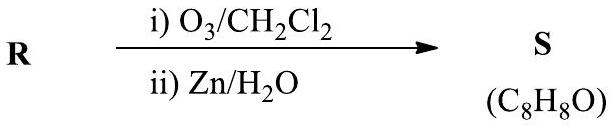
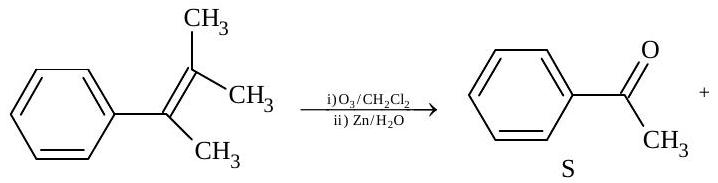
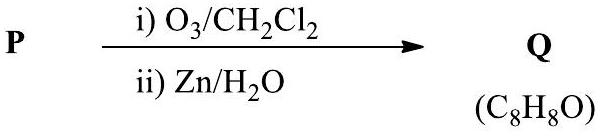
Compounds P and R upon ozonolysis produce Q and S, respectively. The molecular formula of and is . Q undergoes Cannizzaro reaction but not haloform reaction, whereas undergoes haloform reaction but not Cannizzaro reaction.

The option(s) with suitable combination of and , respectively, is(are)
Structure i
i
Structure ii
ii
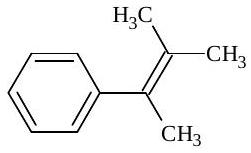
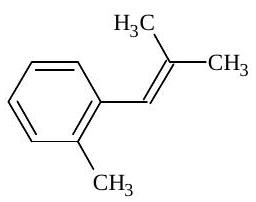
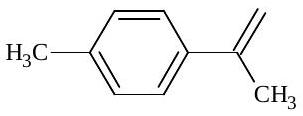
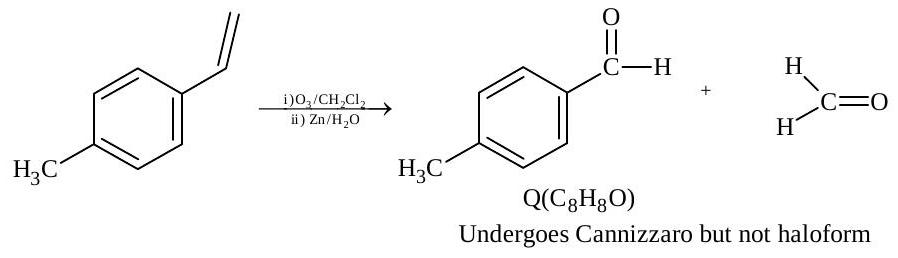
  1. (A)(see structure) and (see structure)
    Structure A
    A
    Structure B
    B
    ✓ Correct
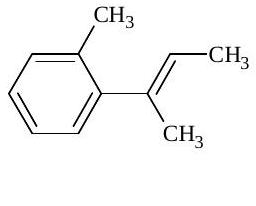
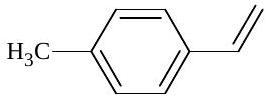
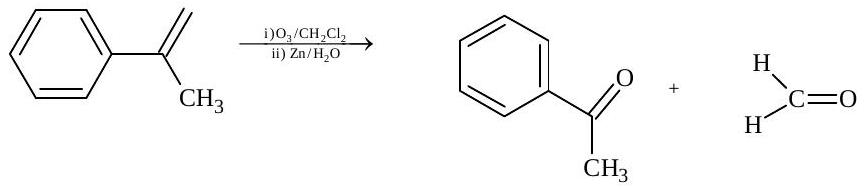
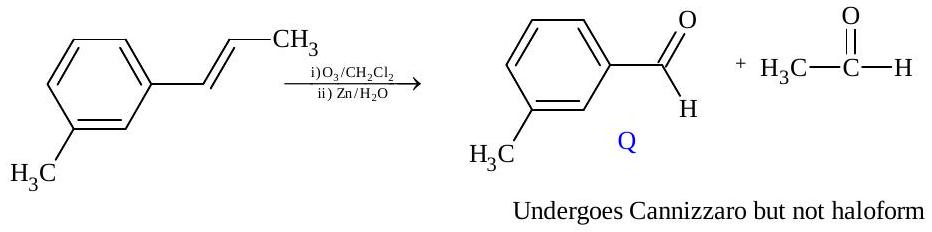
  2. (B)(see structure) and (see structure)
    Structure A
    A
    Structure B
    B
    ✓ Correct
  3. (C)(see structure) and (see structure)
    Structure A
    A
    Structure B
    B
  4. (D)(see structure) and (see structure)
    Structure A
    A
    Structure B
    B

Answer: (A), (B)

Solution

Q undergoes Cannizzaro (no α-H, must be an aldehyde) but not haloform (no methyl ketone). So Q is an aromatic aldehyde without α-hydrogens, likely benzaldehyde derivative.

S undergoes haloform (methyl ketone) but not Cannizzaro (has α-H). So S is an aromatic methyl ketone.

Both have formula .

Q = 4-methylbenzaldehyde or 2-methylbenzaldehyde
S = acetophenone derivative (phenyl methyl ketone)

Ozonolysis of alkenes produces carbonyl compounds. For P to give Q (aldehyde) and for R to give S (methyl ketone), we need appropriate alkene precursors.

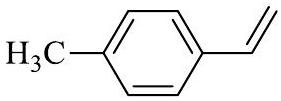
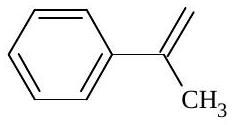
[A] Correct: P = 4-methylstyrene → Q = 4-methylbenzaldehyde + formaldehyde; R = α-methylstyrene → S = acetophenone + formaldehyde.

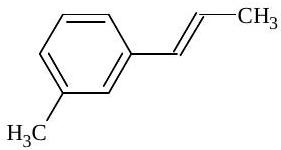
[B] Correct: P = 3-methylstyrene → Q = 3-methylbenzaldehyde; R = isopropenylbenzene → S = acetophenone.

[C] and [D]: The carbon count doesn't match for products.

JEE Advanced · 2017 · 21 May 2017 · Paper 2 · One or more correct options
More JEE Advanced questions on Aldehydes Ketones and Carboxylic Acids

  1. The sum of total number of carbonyl groups present in the major products X and Y in the following reactions is ____.
    JEE Advanced 2026View solution →
  2. The major products obtained from the reactions in List-II are the reactants for the named reactions mentioned in List-I. Match each entry in List-I with the appropriate entry in List-II and choose the correct options.

    List-I
    (P) Stephen reaction
    (Q) Sandmeyer reaction
    (R) Hoffma …
    JEE Advanced 2025View solution →
  3. The correct reaction/reaction sequence that would produce a dicarboxylic acid as the major product is
    JEE Advanced 2025View solution →
  4. Reaction of iso-propylbenzene with followed by the treatment with forms phenol and a by-product P. Reaction of P with 3 equivalents of gives compound Q. Treatment of Q with produces c …
    JEE Advanced 2024View solution →
  5. Complete reaction of acetaldehyde with excess formaldehyde, upon heating with conc. NaOH solution, gives P and Q. Compound P does not give Tollens' test, whereas Q on acidification gives positive Tollens' test. Treatment of P with excess cyclohexanone in the presence of catalytic …
    JEE Advanced 2024View solution →
  6. The option(s) with correct sequence of reagents for the conversion of to is(are) :
    JEE Advanced 2024View solution →