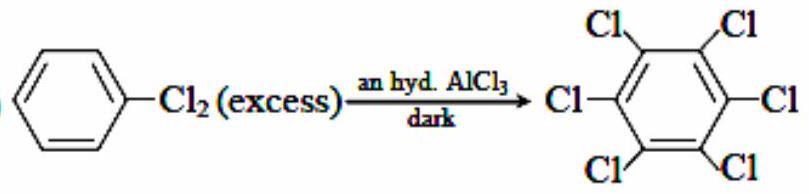
Nucleophilic substitution needs a C−Cl bond that can actually break. In chlorobenzene and in vinyl chloride the C−Cl bond gains partial double-bond character by resonance with the ring or the π system, so it is strong and resists substitution. In the allylic and benzylic chlorides, on the other hand, the C−Cl bond is activated and gives up chloride readily. So the feasible reactions are the allylic and benzylic ones, (b) and (d).
JEE Main · 2020 · 07 Jan 2020 · Shift 2 · Single correct option