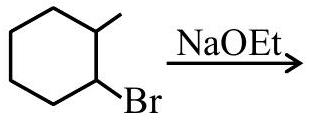
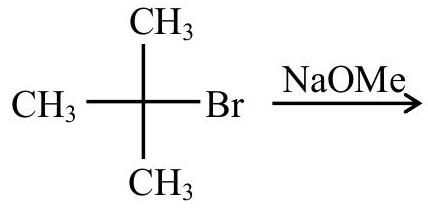
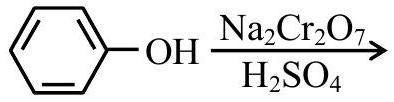
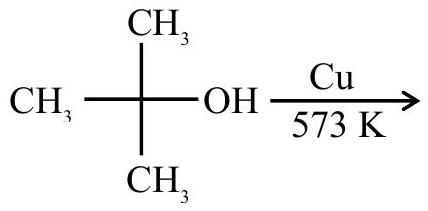
The reactions which cannot be applied to prepare an alkene by elimination, are A. (see structure) B. CH3−CH2−IBrCH−CH3KOH (aq.) C. (see structure) D. (see structure) E. (see structure)
Choose the correct answer from the option given below :
(A)B & E Only
(B)B, C & D Only
(C)A, C & D Only
(D)B & D Only✓ Correct
Answer: (D)
Solution
An alkene forms by elimination only when conditions favour loss of HX or of water over substitution. The bromo-methylcyclohexane with sodium ethoxide, tert-butyl bromide with sodium methoxide, and tert-butyl alcohol heated over copper each lose a small group across adjacent atoms to give an alkene. The secondary halide with aqueous KOH instead undergoes substitution to an alcohol, and phenol with acidified sodium dichromate is oxidised rather than eliminated, so neither of these gives an alkene. The reactions that cannot furnish an alkene by elimination are the aqueous-KOH substitution and the dichromate oxidation of phenol.
JEE Main · 2025 · 07 Apr 2025 · Shift 1 · Single correct option