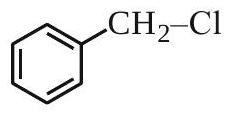
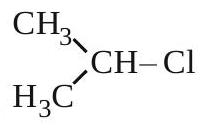
Which among the following halide/s will not show S_N1 reaction: (A) H₂C=CH-CH₂Cl (B) CH₃-CH=CH-Cl (C) (see structure) (D) (see structure)
Choose the most appropriate answer from the options given below:
(A)(A), (B) and (D) only
(B)(A) and (B) only
(C)(B) and (C) only
(D)(B) only✓ Correct
Answer: (D)
Solution
An SN1 reaction requires the substrate to ionise into a reasonably stable carbocation. H2C=CH-CH2Cl (allyl chloride) ionises to an allylic cation stabilised by resonance with the double bond, so it readily undergoes SN1. CH3-CH=CH-Cl (a vinylic chloride) would have to ionise to a vinyl cation, CH3-CH=CH+, in which the positive carbon is sp-hybridised and cannot be stabilised by the adjacent double bond in the same way an allylic or benzylic cation can — vinylic cations are far too unstable to form under normal conditions, so this halide cannot undergo SN1. The remaining substrates ionise to a benzylic-type and a secondary-type carbocation respectively, both stable enough for SN1 to proceed. Only the vinylic chloride, (B), fails to show SN1 behaviour.
JEE Main · 2024 · 27 Jan 2024 · Shift 2 · Single correct option