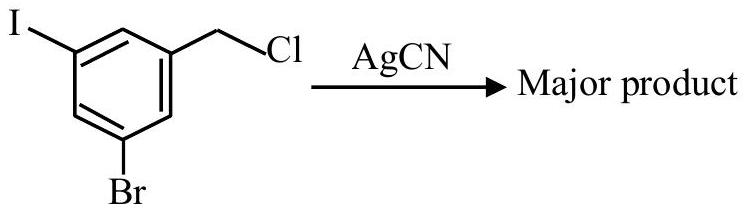
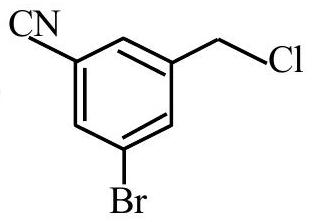
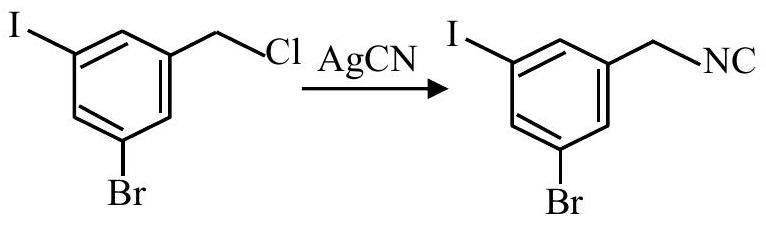
The structure of the major product formed in the following reaction is : (see structure)
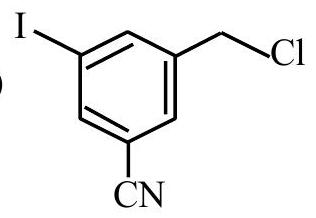
(A)(see structure)
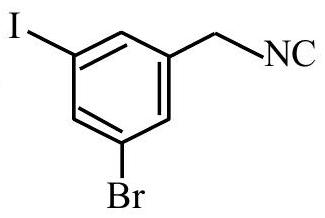
(B)(see structure)✓ Correct
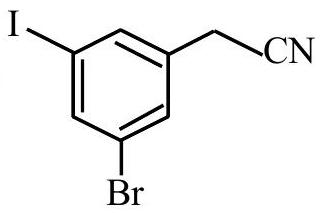
(C)(see structure)
(D)(see structure)
Answer: (B)
Solution
Silver cyanide is a covalent salt in which the softer carbon end of the ambident CN− ligand is already bonded to silver, so when it reacts with an alkyl halide the nucleophile attacks through carbon, giving the isocyanide (isonitrile) as the major product. This is the standard contrast with potassium cyanide: KCN, being ionic, reacts through the harder nitrogen end and gives the nitrile instead.
The aryl carbon–halogen bonds on the ring (the −Br and −I substituents) do not undergo nucleophilic substitution under these conditions, since aryl halides resist SN2 attack. Only the reactive benzylic −CH2Cl is displaced.
The major product therefore retains the bromo and iodo substituents on the ring, with the benzylic chloride converted to −CH2−NC.
JEE Main · 2025 · 24 Jan 2025 · Shift 2 · Single correct option