Statement I: CH3−O−CH2−Cl will undergo SN1 reaction though it is a primary halide.
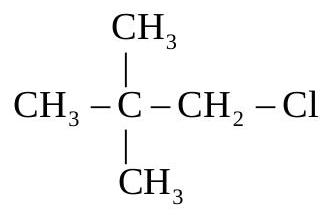
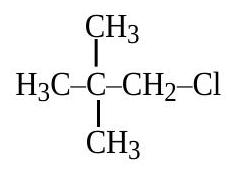
Statement II:
will not undergo SN2 reaction very easily though it is a primary halide. In the light of the above statements, choose the most appropriate answer from the options given below :
(A)Statement I is incorrect but Statement II is correct.
(B)Both Statement I and Statement II are incorrect
(C)Statement I is correct but Statement II is incorrect
(D)Both Statement I and Statement II are correct.✓ Correct
Answer: (D)
Solution
In CH3−O−CH2−Cl, ionisation of chloride gives the carbocation CH3−O−C+H2, stabilised by resonance donation from the adjacent oxygen lone pair (CH3−O+=CH2). This oxocarbenium stabilisation is strong enough that the compound reacts by SN1 even though the carbon bearing chlorine is primary — Statement I is correct.
Neopentyl chloride, (CH3)3C−CH2−Cl, has a primary α-carbon flanked by a quaternary carbon carrying three bulky methyl groups. The steric crowding this creates blocks backside nucleophilic attack, so SN2 proceeds very slowly despite the primary character — Statement II is correct.
Both statements are correct.
JEE Main · 2025 · 22 Jan 2025 · Shift 1 · Single correct option