JEE Main · 2019 · 12 Apr 2019 · Shift 1 · Compounds Containing Nitrogen

WhatsApp Email
The increasing order of the of the following compound is :
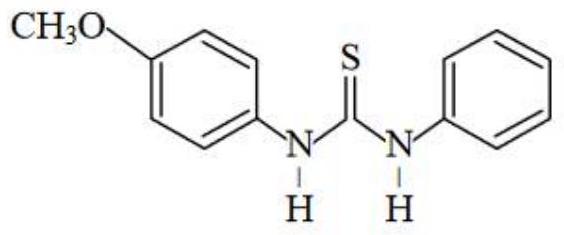
Structure A
A
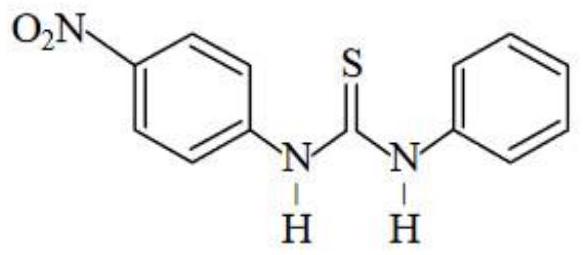
Structure B
B
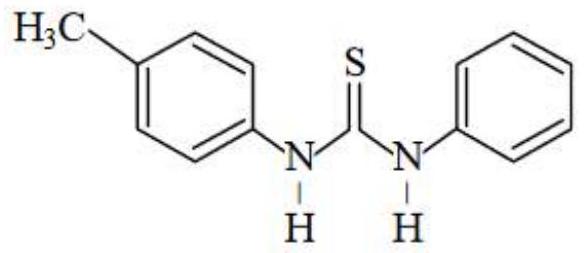
Structure C
C
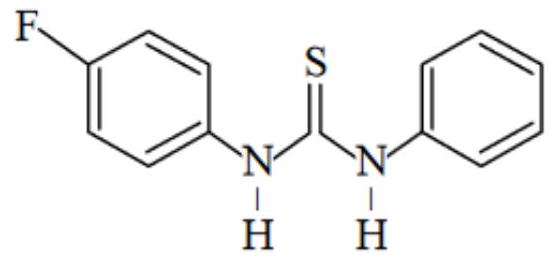
Structure D
D
  1. (A)(c) (a) (d) (b)✓ Correct
  2. (B)(b) (d) (a) (c)
  3. (C)(a) (c) (d) (b)
  4. (D)(b) (d) (c) (a)

Answer: (A)

Solution

Basicity and run opposite ways: the more basic the compound, the smaller its . Electron-donating groups push charge toward the basic centre and raise basicity (lower ), while electron-withdrawing groups do the reverse. Here the substituents rank as (c) strongly withdrawing, (a) weakly withdrawing, (d) weakly donating and (b) strongly donating. In order of increasing this is (c) (a) (d) (b).

JEE Main · 2019 · 12 Apr 2019 · Shift 1 · Single correct option
More JEE Main questions on Compounds Containing Nitrogen

  1. A hydrocarbon 'P' on reaction with HCl gives an optically active compound 'Q' which on reaction with one mole of ammonia gives compound 'R' …
    JEE Main 2026View solution →
  2. An organic compound (P) on treatment with aqueous ammonia under hot condition forms compound (Q) which on heating with and KOH forms compound (R) having molecular formula . Names of and R …
    JEE Main 2026View solution →
  3. Consider the following reaction sequence

    The percentage of nitrogen in product 'T' formed is _____ %. (Nearest integer)

    (Given molar mass in H: 1, C: 12, N: 14, O: 16)
    JEE Main 2026View solution →
  4. 'A' is a neutral organic compound (M. F : ). On treatment with aqueous , 'A' forms a compound ' B ' which is soluble in dilute acid. ' B ' on treatment with aqueous …
    JEE Main 2026View solution →
  5. Consider the above sequence of reactions. The number of bromine atom(s) in the final product (P) will be:

    (1)
    (2)
    (3) pH neutralisation
    (4)
    (5) …
    JEE Main 2026View solution →
  6. The final product is :
    JEE Main 2026View solution →