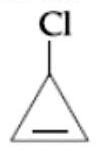
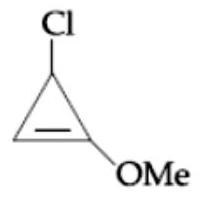
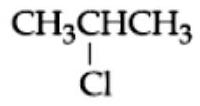
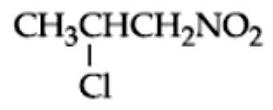
The decreasing order of reactivity of the following organic molecules towards AgNOX3 solution is:ABCD
(A)(A)>(B)>(D)>(C)
(B)(C) > (D) > (A) > (B)
(C)(A) > (B) > (C) > (D)
(D)(B) > (A) > (C) > (D)✓ Correct
Answer: (D)
Solution
Reaction with AgNOX3 proceeds through loss of chloride to form a carbocation, so the more stable that cation, the faster the reaction. The methoxy-substituted allylic chloride (B) gives an allylic cation further stabilised by electron donation from the −OCHX3 group through resonance, making it the most reactive. The plain allylic chloride (A) forms a resonance-stabilised allylic cation but without that extra donation, so it comes next. The isopropyl chloride (C) gives only a secondary cation, and the chloride bearing the electron-withdrawing nitro group (D) forms the least stable cation of all. The decreasing order of reactivity is therefore (B) > (A) > (C) > (D).
JEE Main · 2020 · 04 Sep 2020 · Shift 1 · Single correct option