JEE Main · 2020 · 03 Sep 2020 · Shift 1 · General Organic Chemistry

WhatsApp Email
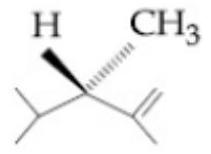
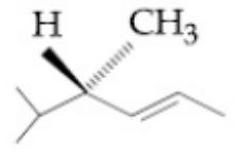
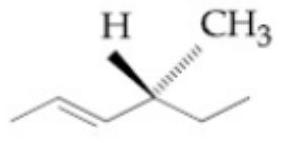
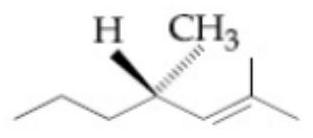
Which of the following compounds produces an optically inactive compound on hydrogenation?
  1. (A)(see structure)
  2. (B)(see structure)
    ✓ Correct
  3. (C)(see structure)
  4. (D)(see structure)

Answer: (B)

Solution

Hydrogenation gives an optically inactive product when the saturated molecule ends up with a plane of symmetry, either achiral or meso. The structure in which adding hydrogen across the double bond produces such a symmetric compound, superimposable on its mirror image, is the one that becomes optically inactive, while the others remain chiral after hydrogenation.

JEE Main · 2020 · 03 Sep 2020 · Shift 1 · Single correct option
More JEE Main questions on General Organic Chemistry

  1. From the following, the least stable structure is:
    JEE Main 2026View solution →
  2. Identify correct statement from the following:

    A. Propanal and propanone are functional isomers.
    B. Ethoxyethane and methoxypropane are metamers.
    C. But-2-ene shows optical isomerism.
    D. But-1-ene and but-2-ene are functional isomers.
    E. Pentane and 2, 2-dimethyl propane are cha …
    JEE Main 2026View solution →
  3. Match List-I with List-II.

    List-I (Pair of Compounds):
    A. 2-Methylpropene and but-1-ene
    B. Cis-but-2-ene and trans-but-2-ene
    C. 2-Butanol and diethyl ether
    D. But-1-ene and but-2-ene

    List-II (Type of Isomers):
    I. Stereoisomers
    II. Position isomers
    III. Chain isomers
    IV. Functio …
    JEE Main 2026View solution →
  4. Given below are two statements:

    Statement-I: Compound (X), shown below, dissolves in solution and has two chiral carbon atoms

    Statement-II: Compound (Y), shown below, has two carbons with hybridization, one carbon with an …
    JEE Main 2026View solution →
  5. The IUPAC name of the following comopound is :
    JEE Main 2026View solution →
  6. Consider all the structural isomers with molecular formula are separately treated with KOH (aq) to give respective substitution products, without any rearrangement. The number of products which can exhibit optical isomerism from these is ____ .
    JEE Main 2026View solution →