JEE Main · 2021 · 31 Aug 2021 · Shift 1 · Haloalkanes and Haloarenes

WhatsApp Email
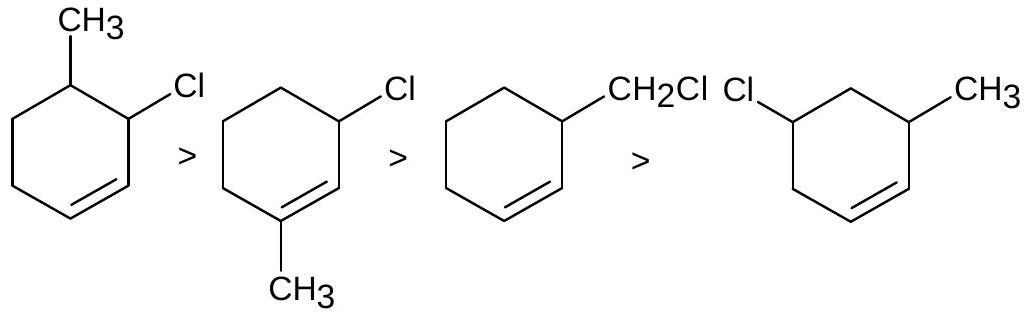
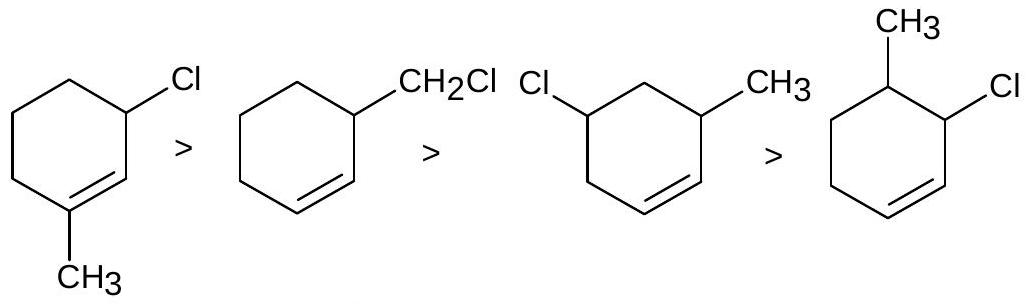
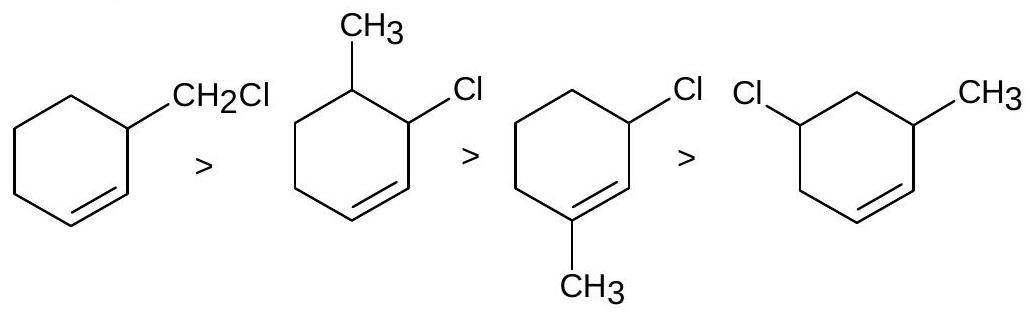
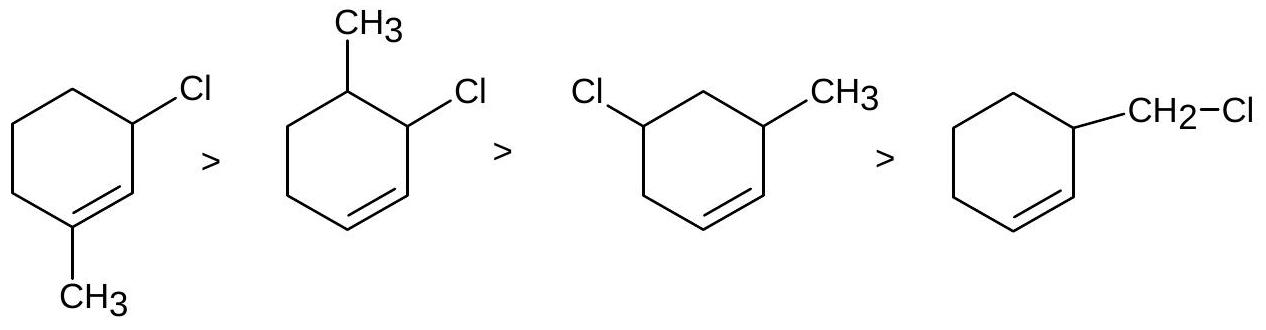
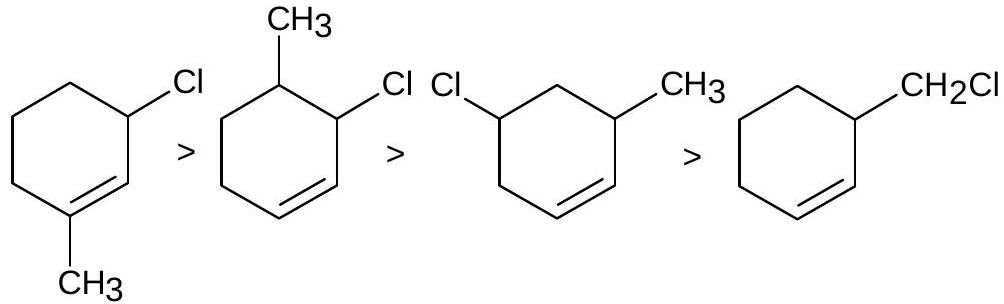
The correct order of reactivity of the given chlorides with acetate in acetic acid is :
  1. (A)(see structure)
    ✓ Correct
  2. (B)(see structure)
  3. (C)(see structure)
  4. (D)(see structure)

Answer: (A)

Solution

Reaction with acetate in acetic acid proceeds by ionisation of the carbon-chlorine bond ( acetolysis), so the rate tracks the stability of the carbocation formed. The allylic chloride whose double bond also carries a methyl group ionises to a tertiary allylic cation and reacts fastest; the two ring-substituted allylic chlorides give secondary allylic cations of intermediate stability; and the exocyclic gives a primary, non-allylic cation and reacts slowest. Reactivity falls from the methyl-substituted allylic chloride, through the two secondary allylic chlorides, to the primary chloromethyl compound.

JEE Main · 2021 · 31 Aug 2021 · Shift 1 · Single correct option
More JEE Main questions on Haloalkanes and Haloarenes

  1. The correct order of reactivity of in methanol with the following nucleophiles is and
    JEE Main 2026View solution →
  2. The correct order of the rate of reaction of the following reactants with nucleophile by mechanism is :
    (Given : Structure I and II are rigid)
    JEE Main 2026View solution →
  3. The correct order of reactivity of the following benzyl halides towards reaction with KCN is:
    JEE Main 2026View solution →
  4. The correct order of the rate of the reaction for the following reaction with respect to nucleophiles is:
    JEE Main 2026View solution →
  5. Given below are four compounds:
    (a) n-propyl chloride
    (b) iso-propyl chloride
    (c) sec-butyl chloride
    (d) neo-pentyl chloride

    Percentage of carbon in the one which exhibits optical isomerism is:
    JEE Main 2026View solution →
  6. Consider the following reaction :


    The product Y formed is :
    JEE Main 2026View solution →