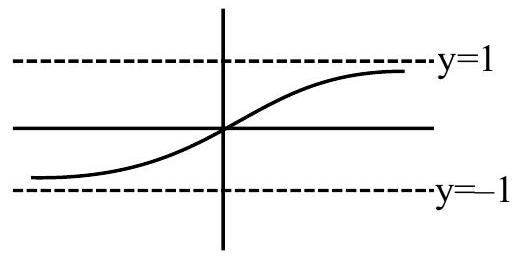
Statement I: The function f:R→R defined by f(x)=1+∣x∣x is one-one.
Statement II : The function f:R→R defined by f(x)=x2−8x+18x2+4x−30 is many-one.
In the light of the above statements, choose the correct answer from the options given below :
(A)Both Statement I and Statement II are false.
(B)Both Statement I and Statement II are true.✓ Correct
(C)Statement I is false but Statement II is true .
(D)Statement I is true but Statement II is false.
Answer: (B)
Solution
For Statement I, f(x)=1+∣x∣x equals 1+xx for x≥0 and 1−xx for x<0. On x≥0, f′(x)=(1+x)21>0; on x<0, f′(x)=(1−x)21>0; and the two branches meet continuously at x=0, so f increases strictly on all of R and is therefore one-one.
For Statement II, the denominator x2−8x+18=(x−4)2+2>0, so f(x)=x2−8x+18x2+4x−30 is defined for every real x. Solving f(x)=−35 gives 3(x2+4x−30)=−5(x2−8x+18), i.e. 8x2−28x=0, so x=0 or x=27. Two different inputs give the same value −35, so f is many-one.
Both Statement I and Statement II are true.
JEE Main · 2026 · 28 Jan 2026 · Shift 2 · Single correct option