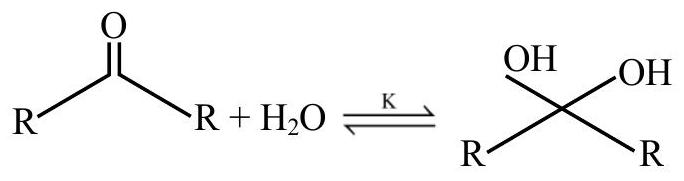
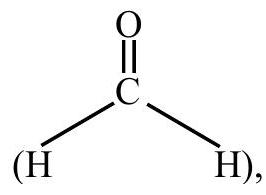
Statement (I): In the case of formaldehyde, K is about 2280, due to small substituents, hydration is faster.
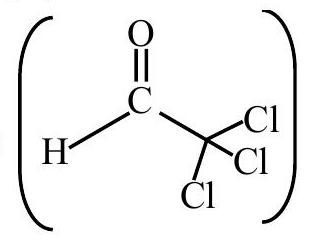
Statement (II): In the case of trichloroacetaldehyde, K is about 2000 due to -I effect of -Cl.
In the light of the above statements, choose the correct answer from the options given below:
(A)Statement I true but Statement II is false
(B)Both Statement I and Statement II are true✓ Correct
(C)Statement I is false but Statement II is true
(D)Both Statement I and Statement II are false
Answer: (B)
Solution
Aldehyde hydration, RX2C=O+HX2ORX2C(OH)X2, is favoured by anything that makes the carbonyl carbon more electrophilic or more accessible to water. Formaldehyde carries only two hydrogens as substituents, so steric hindrance to the approach of water is negligible, giving it one of the largest hydration constants among common aldehydes (K≈2280) — Statement I is correct. Trichloroacetaldehyde (chloral) carries three strongly electron-withdrawing chlorine atoms whose −I effect pulls electron density away from the carbonyl carbon, making it more electrophilic and favouring hydration despite the added bulk, giving K≈2000 — Statement II is correct. Both statements correctly account for the large hydration constants of these two aldehydes.
JEE Main · 2025 · 23 Jan 2025 · Shift 2 · Single correct option