Nucleophilic addition at a carbonyl carbon is favoured by an electrophilic (electron-poor) carbonyl carbon and by low steric hindrance around it.
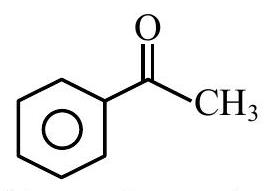
Ketones react slower than aldehydes because the second alkyl/aryl group adds both steric bulk and a +I electron-donating effect that reduces electrophilicity — acetophenone, a methyl ketone, is therefore the least reactive of the four.
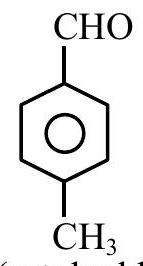
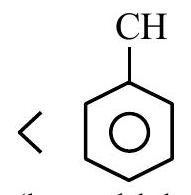
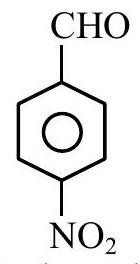
Among the aldehydes, ring substituents change the electrophilicity of the carbonyl carbon: the −CH3 group in p-tolualdehyde donates electron density into the ring, making its carbonyl carbon less electrophilic than in unsubstituted benzaldehyde. The −NO2 group in p-nitrobenzaldehyde withdraws electron density strongly by resonance and induction, making its carbonyl carbon the most electrophilic and hence this aldehyde the fastest to react.
The order of increasing reactivity is acetophenone<p-tolualdehyde<benzaldehyde<p-nitrobenzaldehydeAcetophenonep-tolualdehydebenzaldehydep-nitrobenzaldehyde
JEE Main · 2025 · 24 Jan 2025 · Shift 1 · Single correct option