JEE Advanced · 2014 · 25 May 2014 · Paper 2 · Hydrocarbons

WhatsApp Email
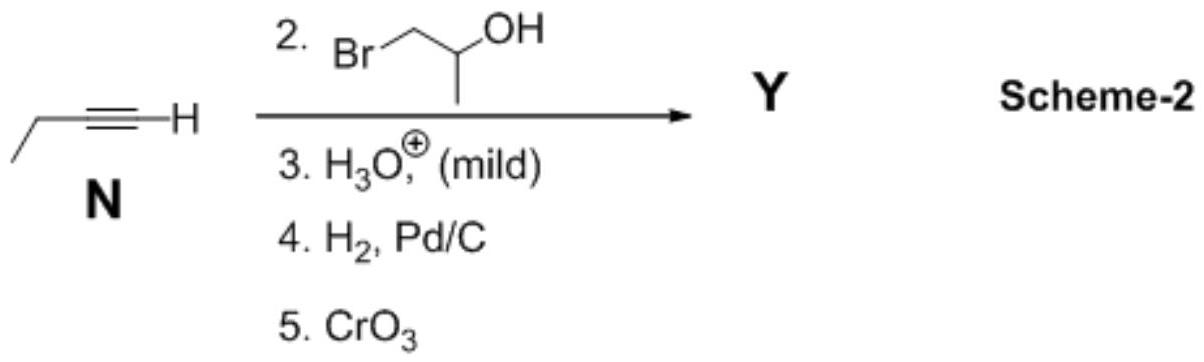
Schemes 1 and 2 describe sequential transformation of alkynes M and N. Consider only the major products formed in each step for both the schemes.
  1. (excess)
  1. (2 equivalent)

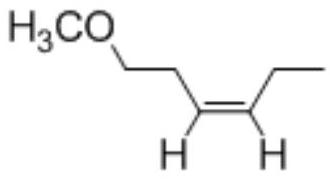
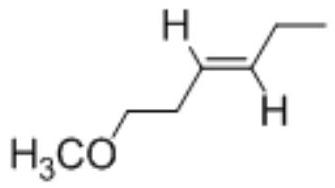
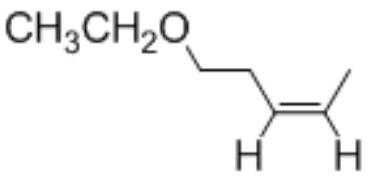
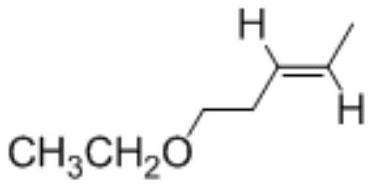
The product X is
  1. (A)(see structure)
    ✓ Correct
  2. (B)(see structure)
  3. (C)(see structure)
  4. (D)(see structure)

Answer: (A)

Solution

In Scheme 1, the alkyne M is treated with excess (a strong base), which deprotonates the terminal alkyne. The resulting acetylide anion then undergoes nucleophilic substitution with an alkyl halide, followed by reduction with (Birch reduction conditions) to give a trans-alkene. The final step involves reaction with an alcohol or ether-forming reagent to give product X, which is the cis-alkene ether shown in option (A).

JEE Advanced · 2014 · 25 May 2014 · Paper 2 · Single correct option

More JEE Advanced questions on Hydrocarbons

  1. In the following reaction sequence Q, R, S and T are the major products.
    The correct statement(s) about and is (are)
    JEE Advanced 2026View solution →
  2. Treatment of buta-1,3-diyne with (2 equivalents), followed by reaction with excess of trans- gives X as the major product. The maximum number of carbon atoms that are collinear (in a str …
    JEE Advanced 2026View solution →
  3. The List-II contains products obtained from the reaction of compounds in List-I with followed by cyclization (via more stable enolate) in the presence of aqueous NaOH. Match each entry in List-I with appropriate entry in …
    JEE Advanced 2026View solution →
  4. Consider the depicted hydrogen (H) in the hydrocarbons given below. The most acidic hydrogen (H) is
    JEE Advanced 2025View solution →
  5. For the reaction sequence given below, the correct statement(s) is(are)
    JEE Advanced 2025View solution →
  6. In the following reactions, P, Q, R, and S are the major products.

    (see structures for reaction schemes)

    The correct statement about , and is
    JEE Advanced 2023View solution →