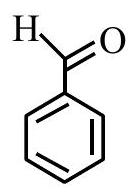
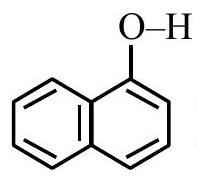
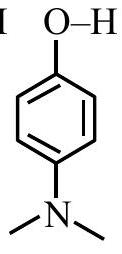
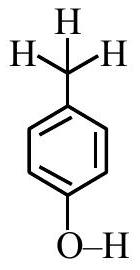
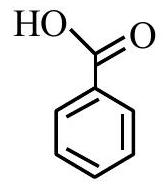
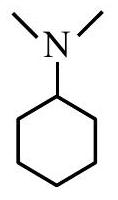
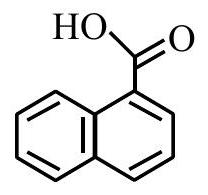
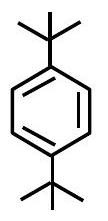
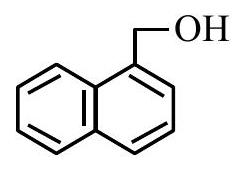
A compound dissolves in aqueous sodium hydroxide only if it is appreciably more acidic than water, that is, phenols and carboxylic acids that form water-soluble sodium salts. Benzaldehyde, N,N-dimethylcyclohexanamine, di-tert-butylbenzene and 1-naphthalenemethanol are respectively an aldehyde, an amine, a hydrocarbon and a primary alcohol, none acidic enough to react. The phenols 1-naphthol, p-dimethylaminophenol and p-cresol, together with the carboxylic acids benzoic acid and 1-naphthoic acid, each form a sodium salt and dissolve. The number of compounds soluble in aqueous NaOH is five.
JEE Main · 2026 · 04 Apr 2026 · Shift 1 · Single correct option